 Florence City Guide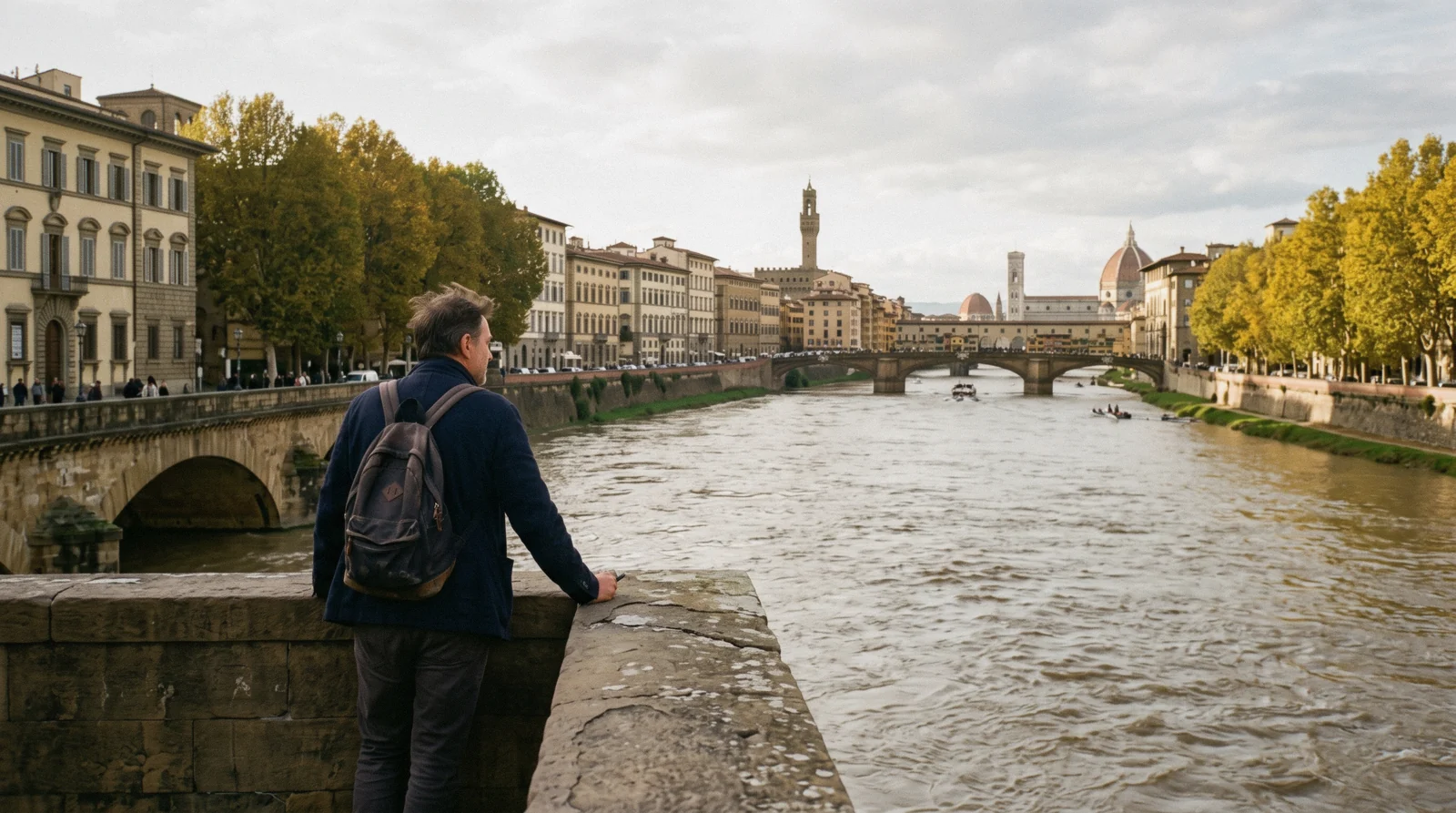
Best Time to Visit Florence
The best time to visit Florence is set by two calendars that rarely appear on the same page: the weather, and the museum year. The climate figures below are thirty-year averages computed from the Open-Meteo ERA5 archive for the city centre, 1995 to 2024. The closures, free days and low-season prices beside them come from each institution's own 2026 calendar. Where no official figure exists — crowd levels by month, hotel rates — we say so and give our own reading instead of dressing an opinion up as data. Once the dates are fixed, the sights and tickets themselves are on what to see in Florence.
Quick answer Two good windows, one trap, one bargain
Come in April and May or in late September and October. Those months average highs of 18–25°C, museums run their long summer hours, and the two climbs are bearable. July and August average 30°C and Florence has no breeze; November is the wettest month of the year on thirty years of data, at 131 mm across almost thirteen rainy days. The cheapest and quietest stretch is January and February, when a weekday 08:15 slot at the Uffizi is still on sale the night before.
Key takeaways
- April, May, September and October are the walking months — the month chart and the weather table show why.
- November is the trap for anyone who came for the climb: 131 mm of rain and the Dome closed for maintenance from 16 to 20 November.
- January and February are the bargain: low-season museum prices, empty first slots, and short days — what closes in winter has the trade-off.
- If your dates are fixed and it rains, an evening concert in a church or a Chianti half-day under cover rescues the afternoon.
Florence month by month
Average daily high temperature by month in Celsius, with the Fahrenheit reading underneath, computed from the Open-Meteo ERA5 reanalysis for 43.77 N, 11.26 E over the thirty years from 1995 to 2024.
The bands below the bars come from the 2026 museum calendar and from our own reading of the visitor season, which is labelled as such. July is the hottest month on the thirty-year mean at 30.4°C, with August a tenth of a degree behind and warmer nights. July is also the driest at 28 mm across four and a half rainy days. November is the wettest at 131 mm across 12.9 rainy days, and it is the month the Dome and Bell Tower take their maintenance closures.
Florence weather by month
Thirty-year averages from the Open-Meteo ERA5 archive for the city centre, 1 January 1995 to 31 December 2024: the mean of daily maximum and minimum temperatures, the mean monthly rainfall total, and the average number of days with at least a millimetre of rain.
| Month | Average high | Average low | Rain | Rainy days |
|---|---|---|---|---|
| January | 9.6°C (49°F) | 2.1°C (36°F) | 75 mm | 10.5 |
| February | 11.1°C (52°F) | 2.4°C (36°F) | 81 mm | 10.0 |
| March | 14.4°C (58°F) | 4.5°C (40°F) | 76 mm | 10.2 |
| April | 18.1°C (65°F) | 7.5°C (46°F) | 81 mm | 11.3 |
| May | 22.3°C (72°F) | 11.7°C (53°F) | 79 mm | 10.5 |
| June | 27.1°C (81°F) | 16.0°C (61°F) | 47 mm | 6.9 |
| July | 30.4°C (87°F) | 18.7°C (66°F) | 28 mm | 4.5 |
| August | 30.3°C (87°F) | 18.9°C (66°F) | 37 mm | 5.6 |
| September | 25.0°C (77°F) | 14.9°C (59°F) | 94 mm | 8.5 |
| October | 20.1°C (68°F) | 11.4°C (53°F) | 104 mm | 11.1 |
| November | 14.3°C (58°F) | 7.0°C (45°F) | 131 mm | 12.9 |
| December | 10.4°C (51°F) | 3.2°C (38°F) | 104 mm | 12.3 |
Florence sits in a river basin ringed by hills, which is why the summer figures read hotter than the Tuscan coast and the winter nights read colder. The Fahrenheit readings are rounded conversions of the Celsius means, not separate measurements.
The rainy season, and what the heat actually closes
Florence has no monsoon and no dry season in the tropical sense; it has a wet autumn. September brings 94 mm, October 104 mm and November 131 mm, and November also has the most rainy days of any month at 12.9. December stays wet at 104 mm.
The driest stretch is high summer — 47 mm in June, 28 mm in July, 37 mm in August — which is exactly when you least want to be outdoors at two in the afternoon. Rain here arrives as a couple of heavy hours rather than a grey day, and the city is small enough to plan around it: the Uffizi, the Accademia, the Bargello, the Opera del Duomo Museum and Palazzo Vecchio are all indoors and all within nine minutes' walk of each other, which is the entire argument for saving a museum day for the forecast rather than fixing it in advance. The one thing rain genuinely cancels is the Torre di Arnolfo at Palazzo Vecchio, which closes when it rains.
Heat closes things too, and the rules are published. Orsanmichele shuts its second floor when the indoor temperature reaches 34°C. Palazzo Vecchio restricts the tower to the walkway on heat-wave red alerts, closing the mezzanine and the Saturn terrace. Neither the Dome nor the Bell Tower has a lift or air conditioning, and the July average high of 30.4°C is measured in the shade, which the 463-step brick spiral is not.
In compensation, Boboli stays open to 19:10 from June to August, which turns the garden into the sensible late-afternoon move; the dates and prices for each climb are on the tickets page. One more heat consequence, stated on the basilica's own page: Santa Maria Novella has run early closures at 15:00 on some August and September 2026 dates. If a church is the reason for your afternoon, check its own calendar the week before.
Month by month, with the dates that actually change a plan
Each month below carries its thirty-year ERA5 averages, then the 2026 calendar facts we could source from the institution itself — free days, closures, seasonal hours and the two price seasons. Where a judgement follows the figures it is ours and is labelled as a verdict.
Florence in January
Average high 9.6°C (49°F), low 2.1°C (36°F), 75 mm of rain over about ten and a half days — the coldest month and, with February, the quietest. Museum low season runs from 1 January to 28 February: Palazzo Medici Riccardi charges €10 (about $12) instead of €15. Boboli closes at 16:30.
On 1 January the Uffizi and the Accademia are shut and much of the Duomo complex with them, so do not build the first of the month around a museum. Verdict: the month to see the Uffizi the way it is meant to be seen, at 08:15 with the rooms half empty.
Florence in February
Average high 11.1°C (52°F), low 2.4°C (36°F), 81 mm over ten days. Low-season pricing continues to 28 February, Boboli still closes at 16:30, and daylight runs out around half past five, which shortens a Piazzale Michelangelo plan more than the temperature does. Nothing major closes for the month.
Verdict: the cheapest fortnight of the year to combine two big museums and a climb, if you accept that the garden days are short.
Florence in March
Average high 14.4°C (58°F), low 4.5°C (40°F), 76 mm over ten days. Prices go back up on 1 March at Palazzo Medici Riccardi, and the Firenzecard Restart option — €28 for another 48 hours on an expired card, digital only — goes on sale the same day. Boboli extends to 17:30, then to 18:30 once the clocks change.
Verdict: the first month when a whole day outdoors works, and still before the coach season.
Florence in April
Average high 18.1°C (65°F), low 7.5°C (46°F), 81 mm over about eleven days — the most rainy days of any spring month, so carry something. Boboli runs to 18:30. The summer night ZTL starts on the first Thursday of April, adding Thursday to Saturday 23:00–03:00 to the camera hours.
On 25 April the Accademia and the Bargello are free with no booking, which means a queue rather than a slot. Easter Sunday closes the whole Duomo complex. Verdict: the best month of the year to walk Florence, as long as you check where Easter falls.
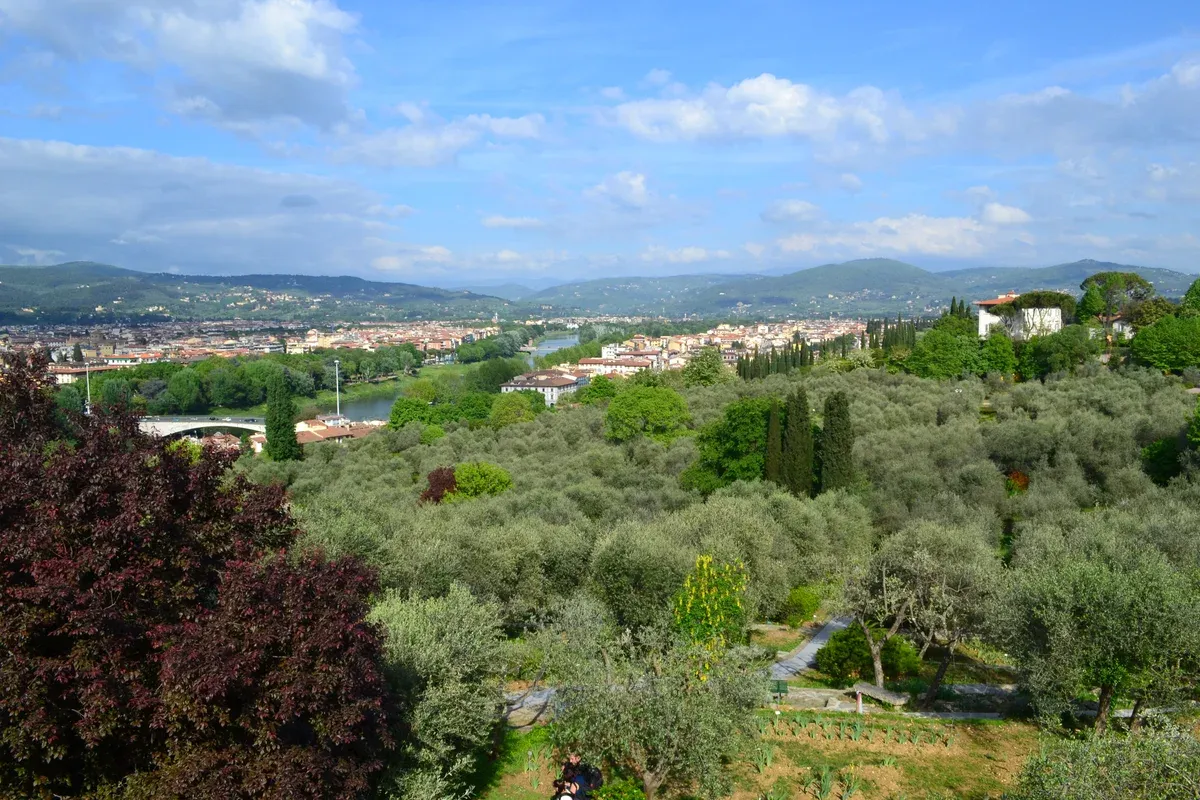
Photo: Olga, CC BY-SA 2.0, via Wikimedia Commons (https://creativecommons.org/licenses/by-sa/2.0)
Florence in May
Average high 22.3°C (72°F), low 11.7°C (53°F), 79 mm over ten days. Everything is open on long hours, Boboli to 18:30, and this is where our own reading of the season begins in earnest: dome slots start going a fortnight ahead rather than a week. Two things drive that.
May is school-trip season, when groups of Italian and European students arrive with free museum entry, and the Maggio Musicale Fiorentino, Italy's first music festival, founded in 1933, runs its opera season from late April into June. The one thing May has that no other month does is the Iris Garden on the east side of Piazzale Michelangelo, open only in spring, where a competition has tried since 1957 to breed an iris in the red of the city's coat of arms. Verdict: the strongest all-round month, and the one that most demands booking the timed tickets before you book the flight.
Florence in June
Average high 27.1°C (81°F), low 16.0°C (61°F), and rainfall halves to 47 mm. The Accademia is free on 2 June with no booking. Boboli opens late, to 19:10, and Museo Galileo extends to 18:00 on 2 June even though it is a Tuesday.
The month turns on 24 June, the feast of San Giovanni, the city's patron saint. That day brings the final of the calcio storico, the bare-knuckle football played on sand in Piazza Santa Croce between teams from the four historic quarters, after two semi-finals earlier in the month, and the Fochi di San Giovanni fireworks after dark. Pitti Immagine, the fashion fair, takes over the second half of the month.
Verdict: long light evenings and warm nights make the Oltrarno the point of the day. Do the indoor hours before noon.
Florence in July
The hottest month on thirty years of data: average high 30.4°C (87°F), low 18.7°C (66°F), and the driest at 28 mm over four and a half days. Vasari Corridor Friday evening openings start on 3 July, 19:00 to 23:00 with last admission at 21:50. Orsanmichele closes its second floor at 34°C indoors and the Palazzo Vecchio tower is restricted on red-alert days.
Verdict: entirely doable if you take the 08:15 slots and treat the middle of the day as museum time; miserable if you plan a climb for the afternoon.
Florence in August
Average high 30.3°C (87°F) and the warmest nights of the year at 18.9°C (66°F), with 37 mm of rain. The Night of San Lorenzo on 10 August opens the Medici Chapels from 19:15 to 23:00, while the basilica of San Lorenzo and the Laurentian Library close that day. Santa Croce is free on 15 August.
Some Florentine businesses shut for the middle fortnight, though the museums do not. Verdict: the month for evening openings and early starts, and the worst month for the Dome.
Florence in September
Average high 25.0°C (77°F), low 14.9°C (59°F) — and the rain returns hard, 94 mm over eight and a half days. Palazzo Strozzi opens 'Broken – The Power of the Fragment' on 25 September, running to 24 January 2027, with Thursdays to 23:00. Santa Croce is free on 14 September and again on 26 and 27 September.
Verdict: the best compromise month of the year, warm enough for the river at dusk and cool enough for the stairs.
Florence in October
Average high 20.1°C (68°F), low 11.4°C (53°F), 104 mm over about eleven days. Boboli drops back to 17:30 once the clocks change, and the summer night ZTL ends on the first Sunday of the month. Santa Croce is free on 4 October.
October is also the tail of the wine year. In the Chianti Classico zone the harvest runs into the second half of the month, depending on the altitude of each vineyard, so an early-October Chianti day trip can still catch the picking. Truffle and mushroom season starts in the countryside, and the olive harvest follows.
Verdict: the best light of the year over the terracotta from Piazzale Michelangelo, and the month when hill-town day trips stop being a heat endurance test.
Florence in November
The wettest month: 131 mm across 12.9 rainy days, with an average high of 14.3°C (58°F). It is also the maintenance month — the Bell Tower closes 9–13 November 2026 and the Dome 16–20 November 2026, and the Vasari Corridor Friday evenings end on 20 November. The Accademia and the Bargello are free on 4 November, Santa Croce on 8 November, and Palazzo Medici Riccardi returns to €10 from 2 November.
Verdict: the cheapest and emptiest month to look at paintings, and the wrong month to book a trip built around the climb.
Florence in December
Average high 10.4°C (51°F), low 3.2°C (38°F), 104 mm over more than twelve days. Low-season museum prices are back, Boboli closes at 16:30, and on 25 December almost everything shuts, including the Duomo complex and the Uffizi. Santa Croce is free on 20 and 26 December.
Mercato Centrale's food hall runs to 23:00 all month, which is the warmest place to end an evening. Verdict: markets, short days and empty galleries; check the closure dates before booking anything for the week of Christmas.
What gets cheaper in winter, and what closes
Only one museum in the centre publishes a seasonal price, and it is the one nobody asks about: Palazzo Medici Riccardi charges €15 (about $18) from 1 March to 1 November and €10 (about $12) from 1 January to 28 February and from 2 November to 31 December, with the reduced rate falling from €7 to €10 in the same way. The Uffizi has no seasonal split at all: a reserved entry is €16 (about $19) in any month. Hotel rates by season are not stated in any source we hold, so we print none; the neighbourhood guide is where the accommodation comparison lives.
What you give up is daylight and opening hours rather than access. Boboli closes at 16:30 in January, February, November and December against 19:10 in high summer, so a garden afternoon becomes a garden lunchtime. The Bell Tower and the Dome take their annual maintenance in November. And two dates close nearly everything: 25 December and 1 January, when the Duomo complex, the Uffizi and the Accademia are all shut.
The honest summary: winter costs less in tickets only at the margins, but it costs far less in queueing, and that is the real currency. In January a weekday first slot at the Uffizi is available at short notice; in May it is not.
Crowds: what is measured, and what is our reading
Florence publishes no month-by-month visitor curve. What the Comune di Firenze does publish, through the Centro Studi Turistici, is the shape of the year as a whole — so we give you that, then say plainly which part of the crowd advice below is ours.
In the first ten months of 2025 the city recorded over 4 million arrivals, up 7.1% on the same period of 2024, and 9.7 million overnight stays, up 8.5%. Foreign markets supplied most of the growth, with the United States alone accounting for 29% of all foreign stays. On top of the people who sleep here, Vodafone mobile-cell data puts day visitors at roughly 8 million across a twelve-month window.
And the number that explains the piazzas: 50,333 tourist-coach permits were issued between January and October 2025, 15,692 more than the year before — an increase of 45.3%.
Our reading, offered as a reading and not as a statistic: the coach season and the cruise-excursion season run from Easter to late October, and they arrive in a wave that hits Piazza del Duomo and Piazza della Signoria between about 10:00 and 16:00. That is the whole basis of the advice on this site to take a first slot and to walk the centre before nine or after seven. In January, February and the first half of March the same streets belong to the city again.
One counter-intuitive point: a free first Sunday is the busiest possible day at the Uffizi and the Accademia, because entry is free, no booking is taken and everyone queues at the gate. If your priority is quiet rather than cheap, pick a Tuesday in February over a free Sunday in October.
Free days and the queues they bring
The Ministry of Culture's #domenicalmuseo rule gives free entry to state-run cultural sites on the first Sunday of every month. In Florence that covers the Uffizi, Pitti, Boboli, the Accademia, the Bargello, the Medici Chapels and San Marco. It does not cover the Duomo complex, which is run by the Opera del Duomo, and it does not cover the civic museums run by the Comune. The ministry's own wording is that visits run in normal opening hours with booking recommended or obligatory where a site requires it — in practice, at the Uffizi and Accademia, the free ticket is issued at the entrance and there is no slot to reserve.
Beyond the first Sundays, 2026 has fixed free dates worth planning around. The Accademia and the Bargello are free on 25 April and 4 November, and the Accademia again on 2 June. Santa Croce sets its own list: 15 August, 14 September, 26 and 27 September, 4 October, 8 November, 20 December and 26 December, with no online booking on those days and last entry at 16:30. The Baptistery closes at 13:30 on every first Sunday of the month, which catches people who assumed the free-Sunday logic applied to the Duomo complex too.
Our verdict on free days is unromantic. If you have three days in the city, do not spend one of them in a queue. Take a booked 08:15 slot instead and use the free Sunday for the churches, the market and the view. If you have a week and a flexible morning, the first Sunday can work, as long as you are at the gate before it opens.
Evening openings, by season
Florence's late openings are seasonal and few, which makes them worth building a day around. The Vasari Corridor runs Friday evening visits from 3 July to 20 November 2026, 19:00 to 23:00 with last admission at 21:50, corridor only, groups of up to 25 leaving every twenty minutes. It is the calmest hour in the corridor, and the detail sits on the corridor's own page.
On 10 August, the Night of San Lorenzo, the Medici Chapels open from 19:15 to 23:00. Palazzo Strozzi runs to 23:00 every Thursday year-round while an exhibition is on. Museo Novecento stays open to 20:00 daily except Thursday, when it closes.
Boboli's 19:10 close from June to August is not an evening opening in the strict sense, but it is the only way to be in a Florentine garden at seven in the evening with a ticket. Outside those, the evening belongs to the streets: the food hall at Mercato Centrale runs to 23:00 every day of the year, the terrace at Piazzale Michelangelo has no closing time, and vespers at San Miniato al Monte are sung in Latin at 18:30 daily and cost nothing.
Tuscany beyond the city, by season
The countryside has a sharper season than the city does. Chianti and the Val d'Orcia are at their best from late April to June and again in September and early October, when the light is long and the vineyards are working; the wine harvest falls in September, which is why tastings that month feel different from the same tasting in March. July and August turn a hill-town day into a heat management exercise, since Siena and San Gimignano have even less shade than Florence.
The coast runs the other way. The Cinque Terre is a summer proposition — the paths, the swimming and the ferries all work best from June to September, and the village trails are the reason to go rather than the villages themselves. Winter there is beautiful and half shut.
Three cards below match those windows: a Chianti half-day at €49, rated 4.5 from 11,454 reviews, which is the low-commitment version at five to six and a half hours; a Cinque Terre day with the hiking option at €54 and 4.9 from 5,886 reviews, twelve to thirteen hours and firmly a summer choice; and a Val d'Orcia day at €73 for the September light. The full route-by-route comparison, including doing it by train, is on Tuscany day trips compared.
Four bookings that fit the season
Two summer days out, one autumn one, and an indoor evening for the wet months. Prices, ratings and review counts are the platform's own. Figures current in Q3 2026.
 from €49
Best seller
from €49
Best seller
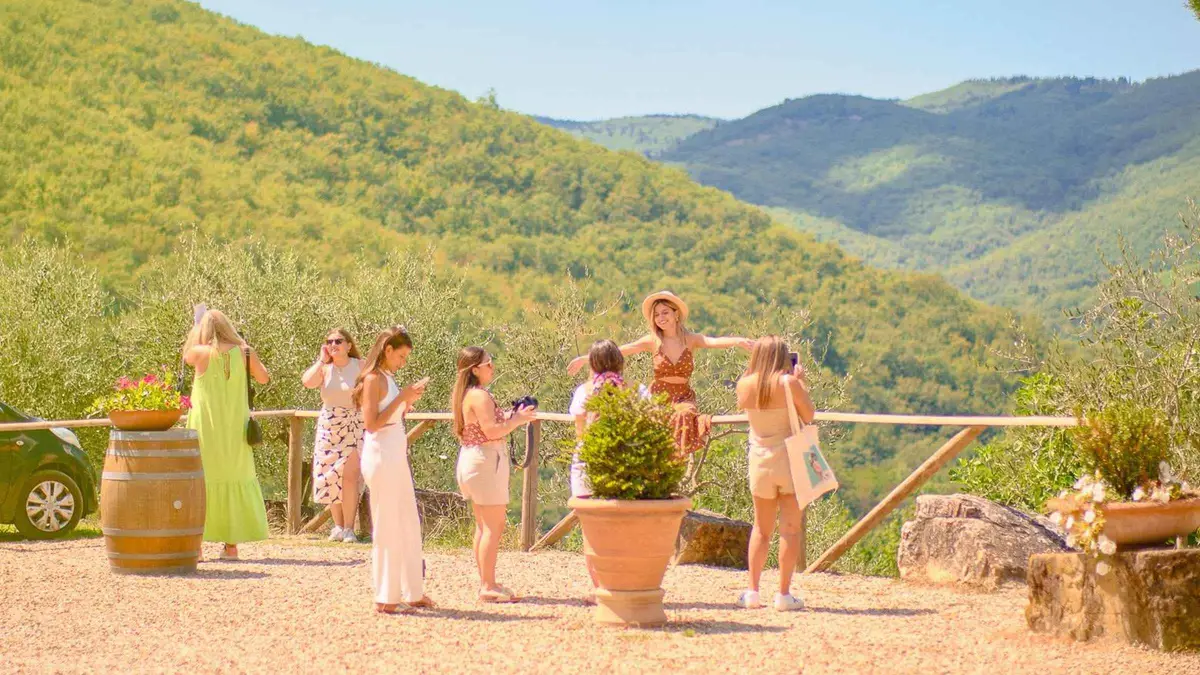
Florence: Chianti Wineries Tour with Wine Tasting
listed at $57.34
Half-day coach trip to two Chianti wineries with 3–4 wines at each plus bread, oil and salami; English or Italian, small-group dinner option. No lunch.
Check Availability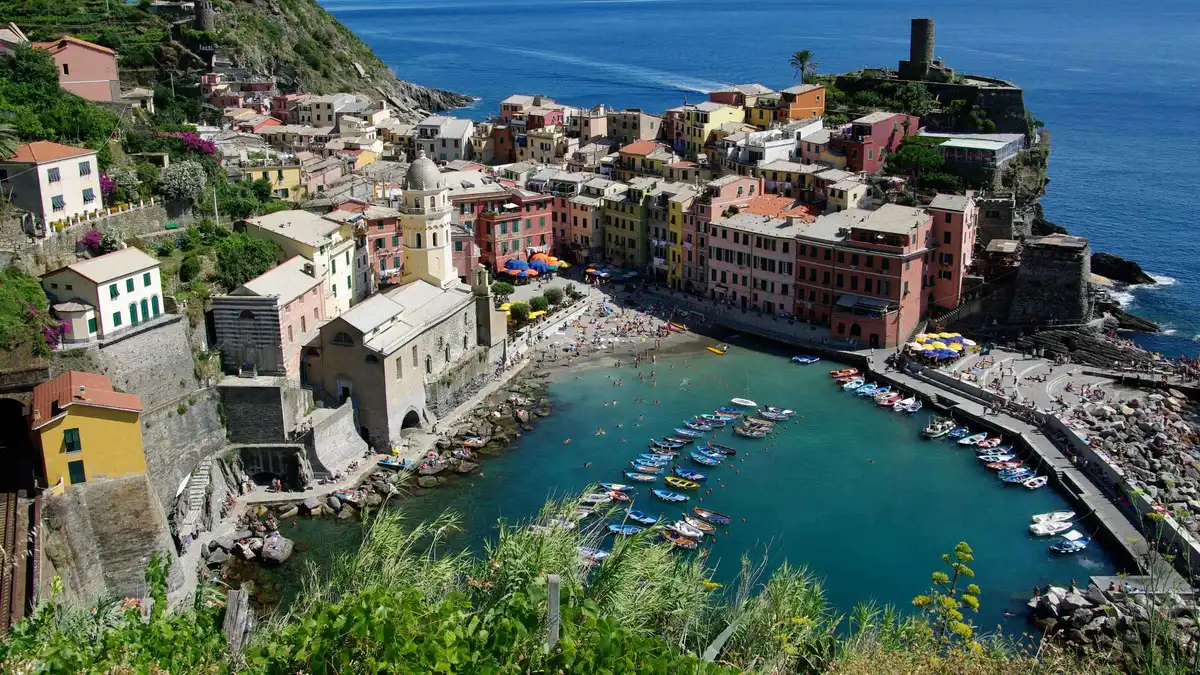 from €54
Top rated
from €54
Top rated
Florence: Cinque Terre Day Trip with Optional Hiking or Pisa
listed at $63.71
12–13-hour day visiting all five Cinque Terre villages with park and train tickets, optional Corniglia–Vernazza hike, or three villages plus Pisa. English.
Check Availability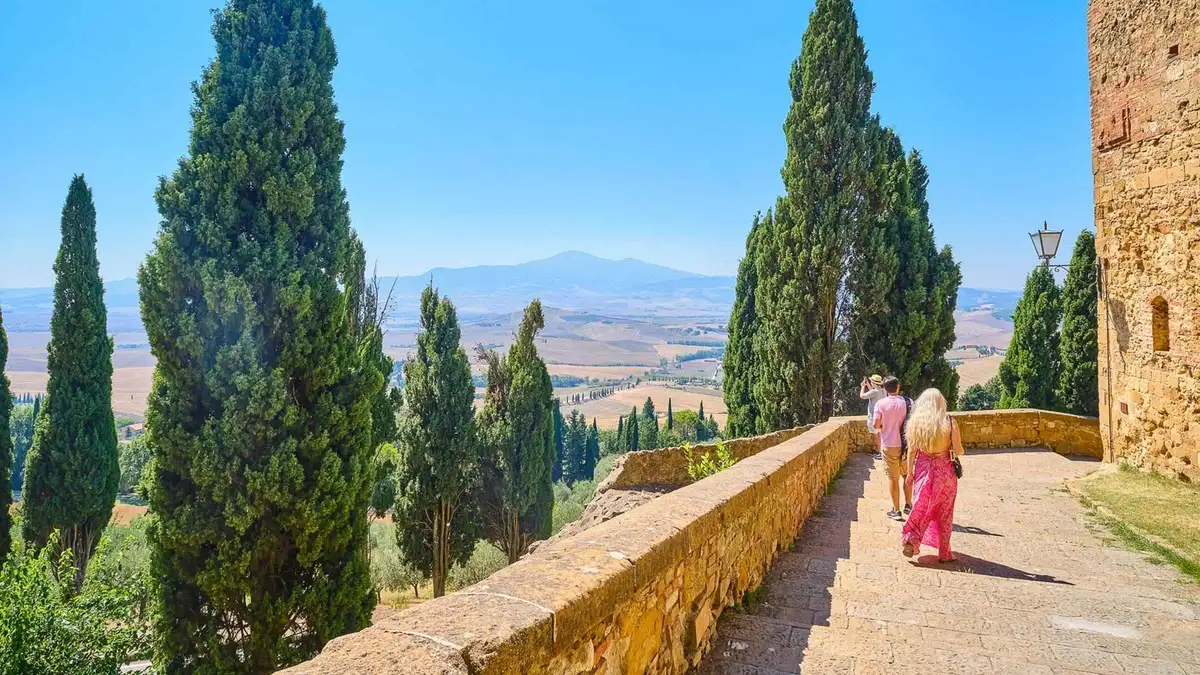 from €73
From Florence: Val D'Orcia Tour with Wine Tasting
listed at $85.25
11.5-hour coach day through Montalcino, Pienza and Montepulciano: Brunello and Vino Nobile tastings, Pienza pecorino; audio-guided in Japanese, Chinese, Korean.
Check Availability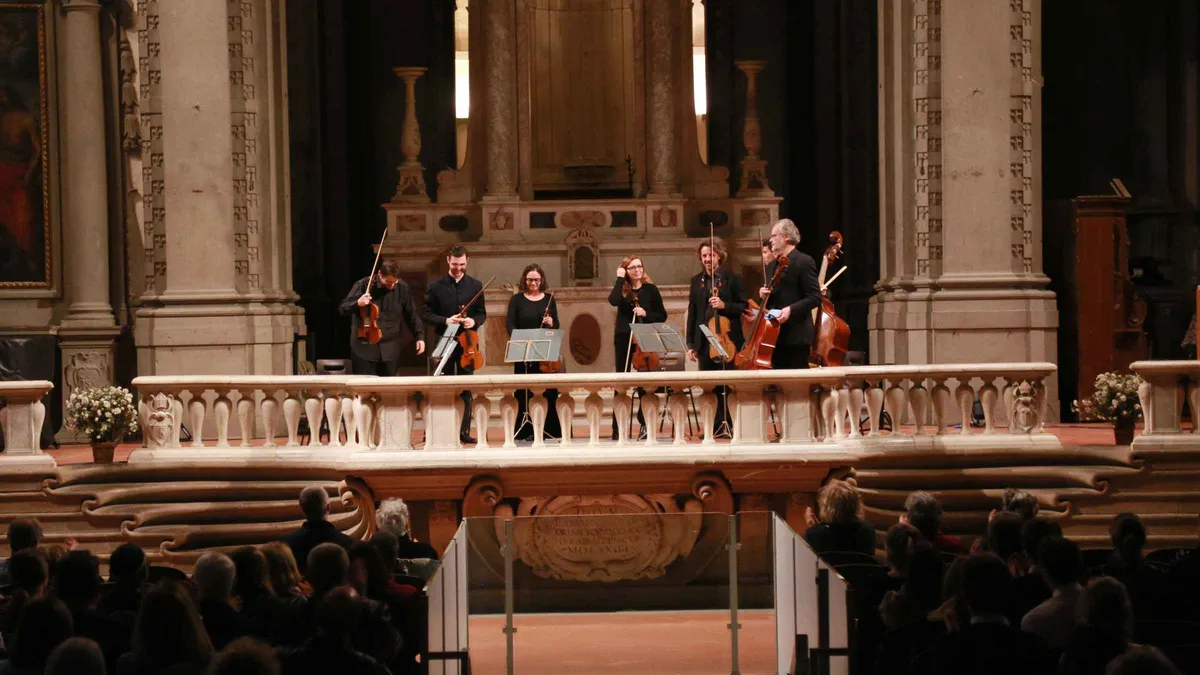 from €35
Florence: Evening Classical Music Concert
listed at $40.54
Evening concert of Vivaldi's Four Seasons, Bach, Mozart and Pachelbel at Chiesa di Santo Stefano or the Zeffirelli Museum; standard, premium or VIP seats.
Check AvailabilityPrices, ratings and details are the platform's own. Dollar figures are the listed prices. The platform bills in your account's currency.
The best month for you, by what you came for
Five readers, five answers. These are our conclusions from the figures above, not official recommendations.
First visit, one big trip. Late April or the last ten days of September. Everything is open on long hours, the averages sit between 18°C and 25°C, and the two climbs are possible without starting at dawn.
Art first, crowds last. The second half of January or February. Low-season prices at Palazzo Medici Riccardi, first slots on sale the night before, and the Uffizi rooms at a walking pace. Accept a 16:30 sunset and a 16:30 Boboli.
Families. Late May or the first half of June, when Boboli runs to 19:10 and evenings are warm enough for the children to be outside after dinner — the day-plan version of this is on Florence with kids.
Photographers. October, for the light on the terracotta from Piazzale Michelangelo, and for the mist in the Arno valley on a clear morning. Bring rain cover: 104 mm across eleven days.
Budget. November or the first fortnight of December, avoiding 25 December. It is the wettest stretch of the year, the Dome and Bell Tower have their maintenance weeks, and everything else is cheap, quiet and open.
How many days you need in Florence is a different question from when to come, and it is answered elsewhere on this site. In short: two full days cover the Uffizi, the Accademia, the Duomo complex and the Oltrarno; a third adds Pitti and Boboli or a day in the hills. The three routes are laid out on one day, two days and three days, and the whole planning checklist sits on plan a trip to Florence.
Plan the rest of the trip
Three days that dodge the closures
A day-by-day route with the slots already placed around Monday and Sunday: three days that dodge the closures.
All walkableThe November dome closure in detail
Which pass opens which monument, and the exact maintenance dates: how the three Duomo passes differ.
463 steps, no liftTuscany day trips compared
Chianti, Siena, Pisa, Lucca and the Cinque Terre, each with the train option weighed against the coach: Tuscany day trips compared. Or go back to things to do in Florence.
Seven destinationsBest time to visit Florence: questions
What is the rainy season in Florence?
Autumn. September averages 94 mm, October 104 mm and November 131 mm across 12.9 rainy days, which makes November the wettest month of the year on thirty years of ERA5 data. July is the driest at 28 mm. The full grid is in the weather table.
What is the cheapest time to go to Florence?
January to February and 2 November to 31 December, when Palazzo Medici Riccardi charges €10 instead of €15 — the only documented seasonal museum price in the centre. The Uffizi has no seasonal rate: a reserved entry is €16 all year. Hotel rates by season are not stated in our sources; see what gets cheaper in winter and where to stay.
What is the quietest time to visit Florence?
A weekday in January or February, and never a free first Sunday, when entry to the state museums is free, no booking is taken and everyone queues at the gate. Our reasoning, and the official arrivals figures behind it, are in crowds.
Is August too hot for Florence?
It is the month with the warmest nights, 18.9°C on average, and days averaging 30.3°C. It is workable with early slots and indoor afternoons, and it carries the Night of San Lorenzo on 10 August when the Medici Chapels open to 23:00. It is the worst month for the 463-step Dome climb — see the heat section.
Is March a good time to visit Florence?
Yes, if you want the first month that works outdoors: an average high of 14.4°C, museum hours lengthening, Boboli extending to 17:30 and then 18:30, and the coach season not yet started. The month block is Florence in March.
Is April a good time to visit Florence?
It is the best walking month of the year — 18.1°C average high — with two caveats: it has the most rainy days of the spring at 11.3, and Easter Sunday closes the entire Duomo complex. The Accademia and the Bargello are free on 25 April, without booking. See Florence in April.
What is closed in Florence?
The Bell Tower from 9 to 13 November and the Dome from 16 to 20 November, both for maintenance, and the Vasari Corridor's Friday evening openings finish on 20 November. Everything else runs normally, and the Accademia, Bargello and Santa Croce all have free days that month. Pass details are on Duomo tickets.
When is the best time to visit Florence and Tuscany together?
Late April to early June, or September into early October: vineyards working, hill towns bearable, and the light long. The Cinque Terre is the exception and wants high summer. Cards and the reasoning are in Tuscany beyond the city and on day trips.
When to Visit Florence, on Video
Three clips on the seasonal question, from a resident guide, a long-form tips video and a recent seasons-and-crowds rundown.
When is the best time for a visit in Florence?
A Florence-based guide's own answer on months, weather and when the city gets its streets back.
Video: Guide me FlorenceBest Time to Visit Florence Italy 4K | Weather, Seasons, Crowds & Travel Tips
Season-by-season footage of the city with the crowd and weather trade-offs called out.
Video: Worth Going43 Tips I Wish I Knew Before Visiting Florence, Italy
Covers the timing mistakes — free Sundays, first slots and August afternoons — that this page argues against.
Video: Camden DavidVideos load from YouTube only when you press play.
Prices, hours and terms are set by the venue or operator and confirmed at checkout.
We may earn a commission if you book through one of our links, at no extra cost to you. Full affiliate disclosure